From first click to certificate.
Every HospAux course follows the same path, built from a real hospital's work. Students see each task done, do it themselves, put the tasks together, and prove it.
The learning path
- Show Me: see each task done
- Practice: do it yourself
- Refreshers: keep it fresh
- Data entry drills: real paperwork
- Case scenarios: a patient's story
- Assessment: ten tasks, no hints
- Certificate: checked by QR
Show Me
Each task is walked through on the screens it's done on, one step at a time, in the order the work happens on the floor. Every step marks the exact place to act, and says what to do and why.
- The real screens of the MedAura hospital ERP
- A demo hospital and demo patients, never real data
- Pick up where you left off, on any device
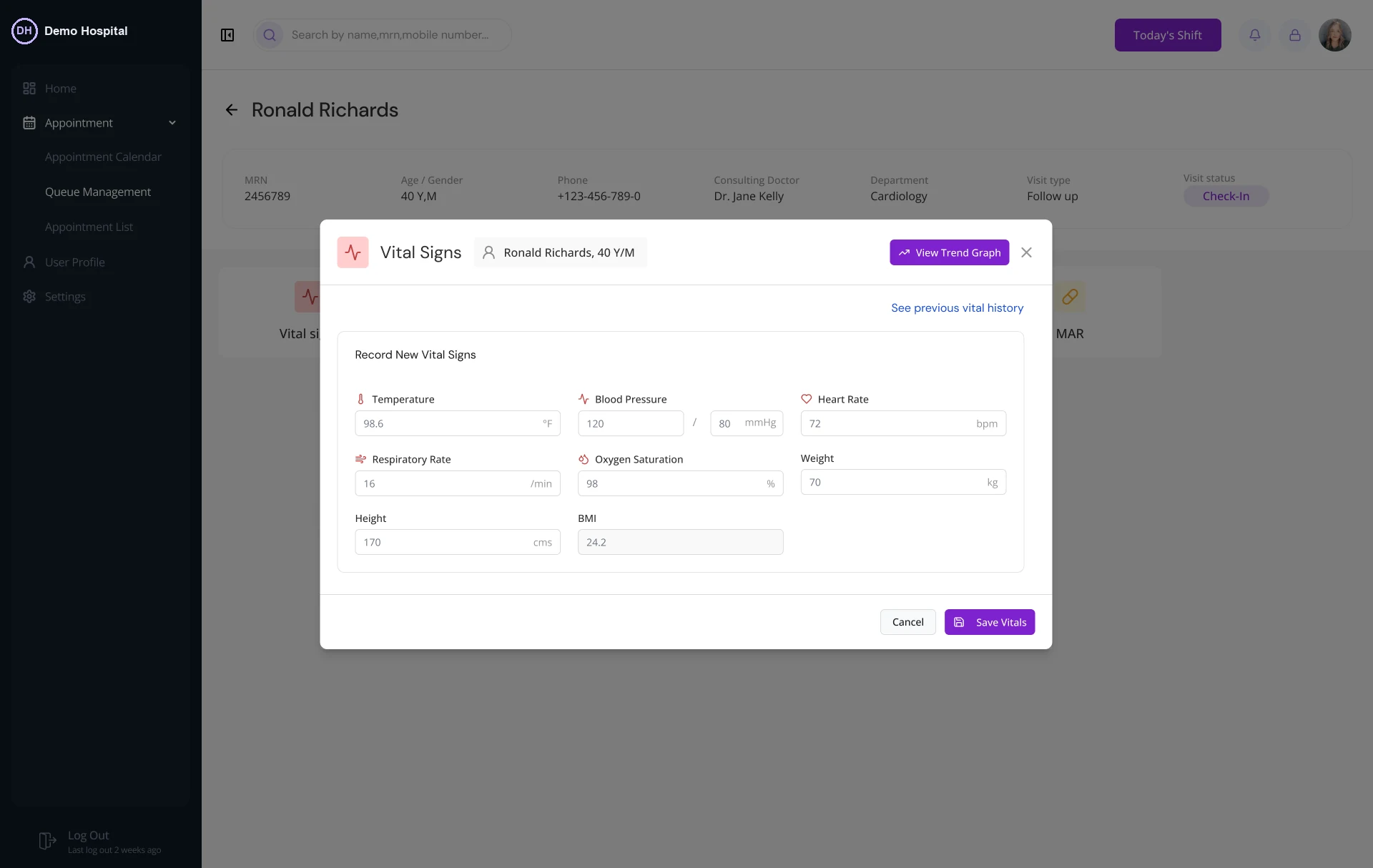
Practice
Practice gives the instruction and nothing else: no highlight, no hint. Students click where they would at work. A wrong click names what they clicked and where to look; a second one shows the answer, which they then click to go on.
- The score is the steps found first time
- At the end, a run of just the missed steps
- Every result saved to the student's account
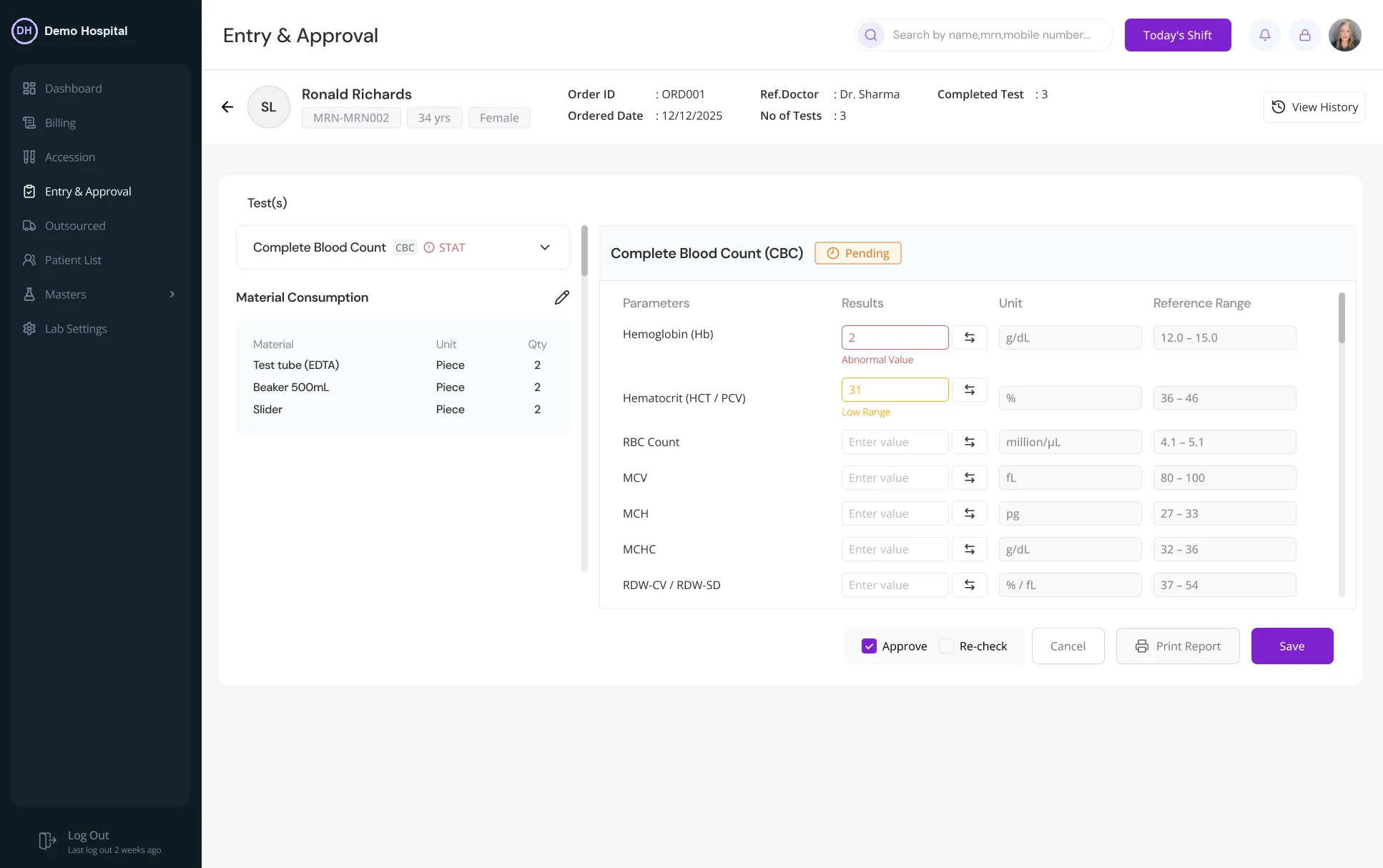
Refreshers
A task learned once is soon forgotten. HospAux brings each task back for practice at growing gaps, just before it would slip, so it sticks until the first posting and beyond.
Refreshers that are due show up in the student's weekly plan and To-dos.
Data entry drills
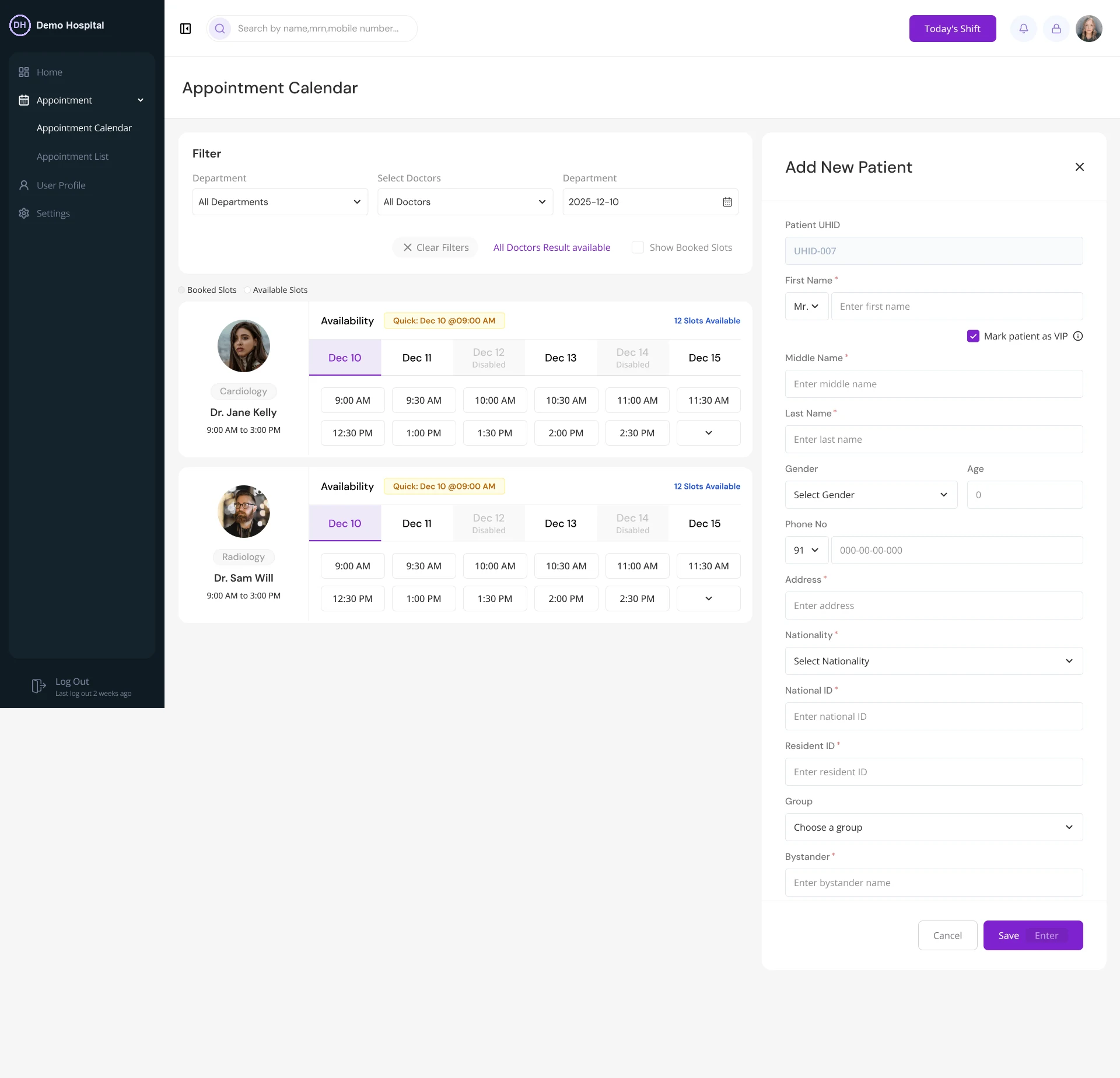
Hospital work comes on paper: a registration slip, an observation chart, an analyser printout, a handwritten prescription. Drills put that paper beside the real form, and students type a few records in a row, as they would on a shift.
- Each record checked as it's done
- Capitals and extra spaces forgiven; numbers, dates and times must match
- Scored on fields right; the time is shown, with a best time
Registration slip
- Name
- Ms. Hazel Quinn
- Gender
- Female
- Age
- 34
- Mobile
- 90000 41275
- Address
- 14 Lake Road, Kadavanthra, Kochi
Case scenarios
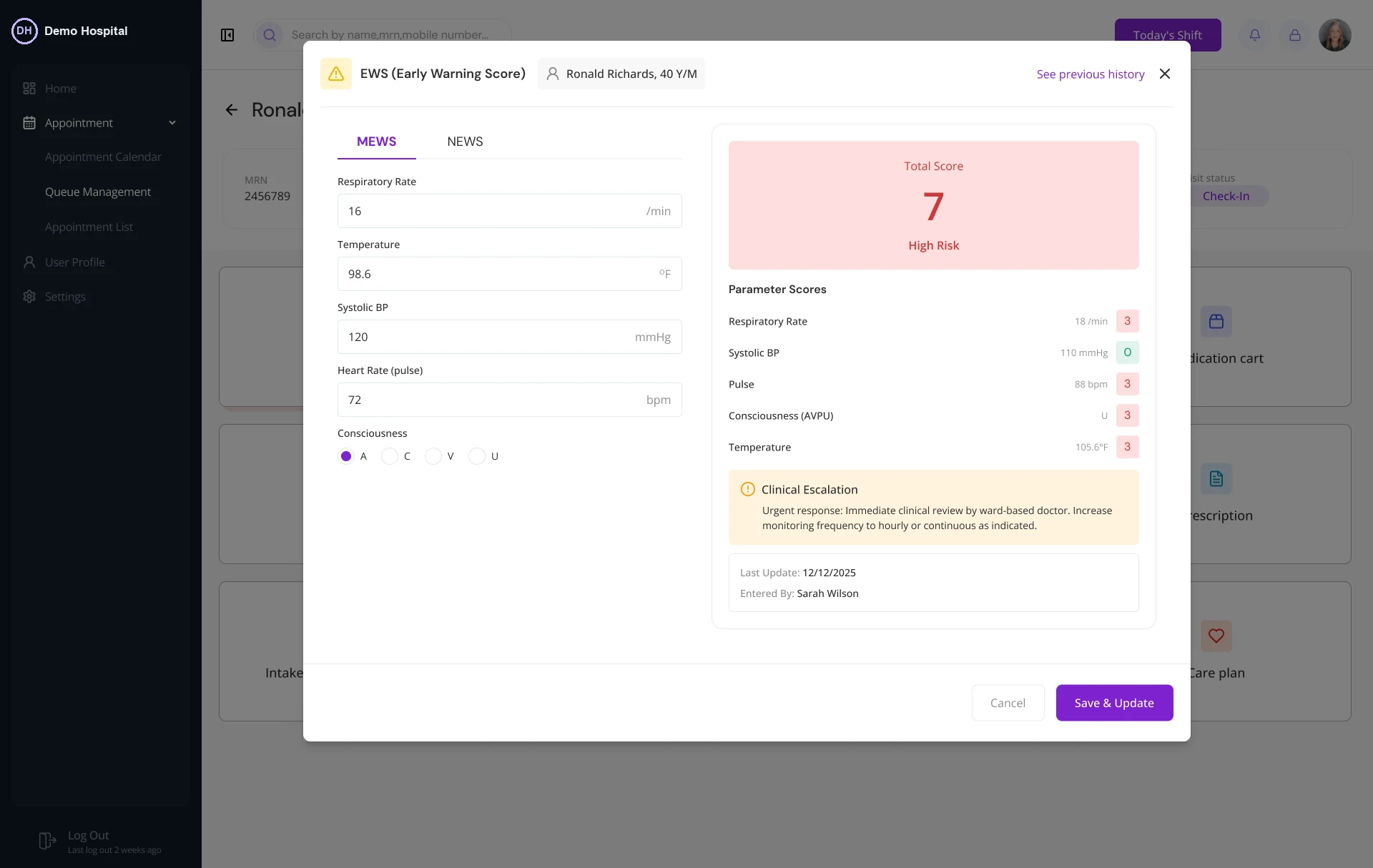
Cases put the tasks together. A patient's case, or a hospital situation, is told scene by scene with a case sheet beside it. Some scenes are decisions, where a wrong choice explains why and the student chooses again; others are the course's own tasks, done on the screens.
- Scored on decisions right first time and steps found first time
- Practice: the score never counts against the certificate
- Institutes see every student's case and drill scores
The assessment
When a student is ready, they take the course's assessment on their own: ten tasks drawn from across the course's units, one click per step, with no hints, marked on the screens.
- Pass at 70%
- Three attempts, the best counts; then one more every 7 days
- No teacher needed to sit it
The certificate
A pass earns a certificate on the spot, once the student confirms the name to print. It carries a grade, never a percentage, a number and a QR code, so anyone can check it online without signing in.
- Never expires; a better grade later replaces it
- Saved as a PDF from its check page
Check it online by its number
Learning that keeps going
Around the path, a few things keep students moving without a teacher having to push.
A weekly plan
Each Monday: new tasks to learn, tasks to practise, a refresher, a drill or a case.
A finish date
Pick a pace or a date; every unit gets a date to aim for.
To-dos
Refreshers due, an assessment you're ready for, a certificate to claim.
A course player
The course in its own tab: the outline on one side, the task on the other.
See it with your own courses.
We'll walk you through HospAux with the courses your institute teaches.